CourseLover
$10/per page/Negotiable
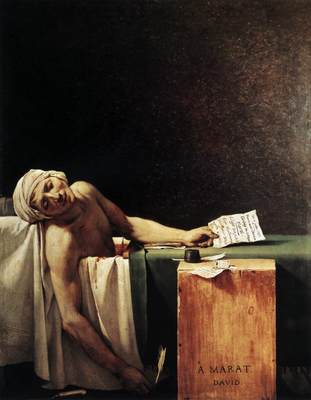
In “Modernisms,” James Elkins recounts TJ Clarke’s theory that “The Death of Marat” by David (which we looked at earlier this semester) is the first Modernist painting, which might seem strange because it was painted in 1793. Clarke believes that after “The Death of Marat,” painting was “forced to include the accident and tendentiousness of politics in its picture of the world—not just in the thing it shows, but in its conception of what showing now is” (qtd. in Elkins 8). In other words, from Marat forward, the politics are in the content (the subject matter of the painting) as well as in the form (how the content is framed). (Look at the Elkins reading for further explanation of this.)
Michael Lewis, an art professor, explains in an article called “How Art Became Irrelevant” that after World War I broke out in 1914, and people got used to seeing mutilated soldiers (missing limbs or parts of their faces), German painters such as Ernst Kirchner, Otto Dix, and George Grosz changed the way they depicted the human form:
“The human body—dynamic, beautiful, created in God’s image—had long been the central subject of Western Art. It was now depicted in the most tormented and fragmented manner, every coil of innards laid bare with obscenely morbid imagination. Kirchner and Dix depicted the gore. Grosz, who refrained from showing actual injuries, was even more disturbing. He made collages of faces out of awkwardly assembled parts, like a jigsaw puzzle assembled with the wrong pieces, suggesting those sad prosthetics that would have been an ubiquitous presence in 1918” (Lewis 3).
In light of the above examples and considering Elkins' conversation about Modernisms, discuss what makes "Guernica," "Music," and/or "Broken Column" distinctly modern. Be sure to look closely at the art work and refer to specific features from each painting you discuss. (Note the minimum length of 4 pages.)
RESOURCES FOR THE PAPER:
Guernica: http://www.museoreinasofia.es/en/collection/artwork/guernica
Music: http://www.henri-matisse.net/paintings/bgc.html
Broken Column: http://www.fridakahlo.org/the-broken-column.jsp
*Elkins' article is attatched*
*Death of Marat painting is attatched*
Attachments: