SuperTutor
$15/per page/Negotiable
Lon Timur is an accounting major at a midwestern state university located approximately 60 miles from a major city. Many of the students attending the university are
from the metropolitan area and visit their homes regularly on the weekends. Lon, an entrepreneur at heart, realizes that few good commuting alternatives are
available for students doing weekend travel. He believes that a weekend commuting service could be organized and run profitably from several suburban and
downtown shopping mall locations. Lon has gathered the following investment information. 1. Five used vans would cost a total of $76,000 to purchase and would have a 3-year useful life with negligible salvage value. Lon plans to use straight-line
depreciation. Ten drivers would have to be employed at a total payroll expense of $47,990. Other annual out-of—pocket expenses associated with running the commuter service would include Gasoline $15,990, Maintenance $3,290, Repairs $4,000,
Insurance $4,210, and Advertising $2,500. Lon has visited several financial institutions to discuss funding. The best interest rate he has been able to negotiate is 15%. Use this rate for cost of capital. Lon expects each van to make ten round trips weekly and carry an average of six students each trip. The service is expected to operate 30 weeks each year,
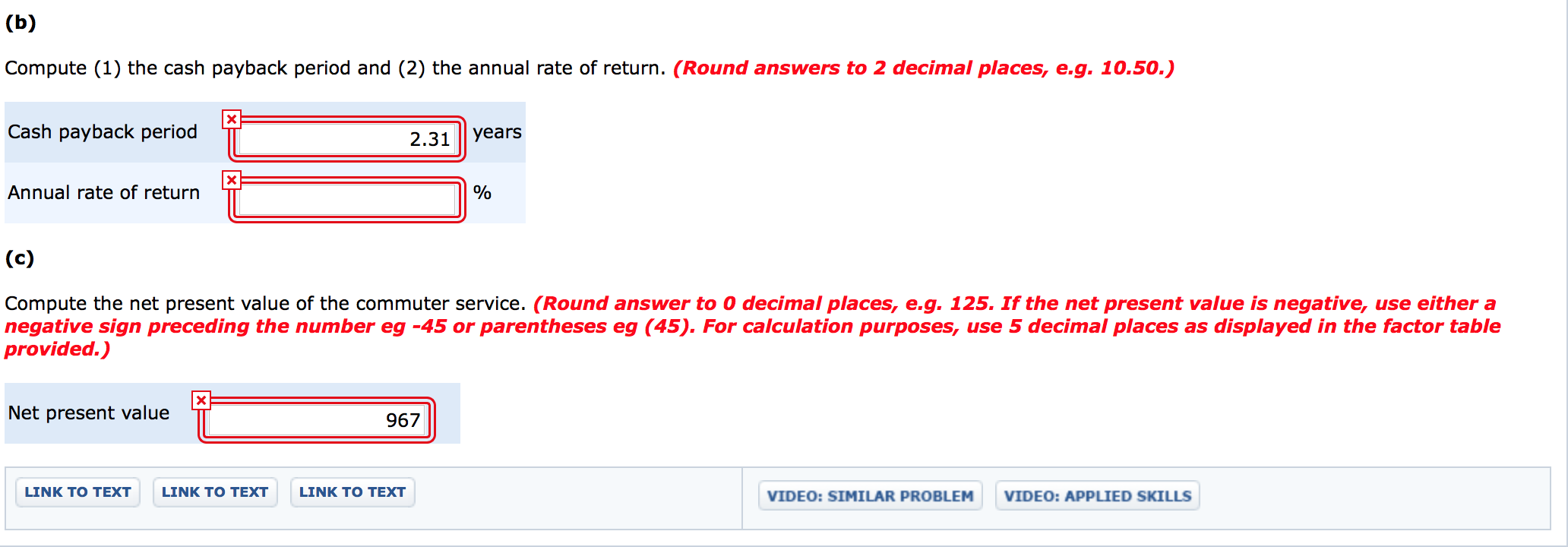
and each student will be charged $12.05 for a round-trip ticket. Click here to view PV table. (3) Determine the annual (1) net income and (2) net annual cash flows for the commuter service. (Round answers to 0 decimal places, e.g. 125.) Net income 7537 Net annual cash flows 32970 X $ X $