QuickHelper
$20/per page/
Question description
A vapor cloud ignition at Universal Form Clamp, Inc., Bellwood, Illinois, U.S. on June 14, 2006 led to a serious accident. According to the case study issued by the
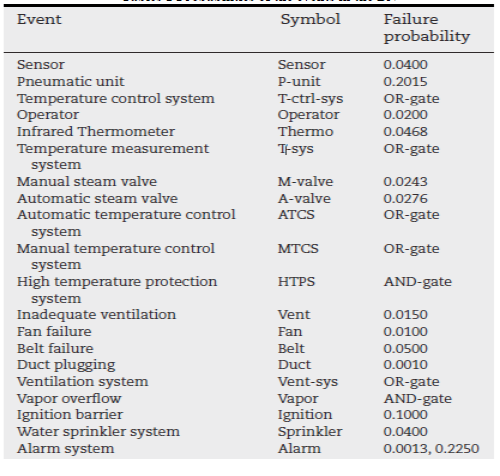
U.S. Chemical Safety Board: (http://www.csb.gov/assets/document/CSBUniversalFormClampCaseStudy.pdf), a flammable vapor cloud consisting of heptane and mineral spirits overflowed from an open top mixing and heating tank. The vapor cloud ignited as it met unknown ignition sources, leading to one death, two injuries and significant business interruption. The tank was equipped with steam coils supplying it with heat needed for the mixing process. A temperature controller composed of a temperature sensor and a pneumatic control unit was installed to operate the steam valves based on the mixture temperature. In addition to the aforementioned control system, an operator was supposed to check the temperature using an infrared thermometer and to take any necessary actions. The tank was also equipped with local exhaust ventilation at the top to control vapors. According to the fullscale investigation conducted by the Chemical Safety Board, a malfunction of the temperature control system allowed the steam valves to remain open long enough to heat the mixture to its boiling point, generating a high volume of vapor. Consequently, the failure of the local ventilation system due to a broken fan belt caused the vapor cloud to spill from the tank and finally ignited when exposed to an ignition source. It was also found that even if the ventilation system had been working, it would not have had enough capacity to collect such a high volume of vapor. Table 1 gives the events and their probabilities.
1) Please review the CSB report and develop a Bayesian network to predict the probabilities of various consequences:
a) safe evacuation,
b) wet vapor cloud near the ground,
c) safe evacuation with possibly of delayed ignition,
d) fire, moderate property damage, low death toll,
e) fire, moderate property damage, high death toll,
f) fire, high property damage, low death toll,
g) fire, high property damage, high death toll.
2) If you have observed consequences c) and d) occurred once in the past year. How this will affect the probability of the accident (which is g)-high property damage, high death toll)? (You may use software, e.g., GeNIe https://dslpitt.org/genie/, to perform the calculations.)
Tables 1 Probabilities of the events in the BN: