QuickHelper
$20/per page/
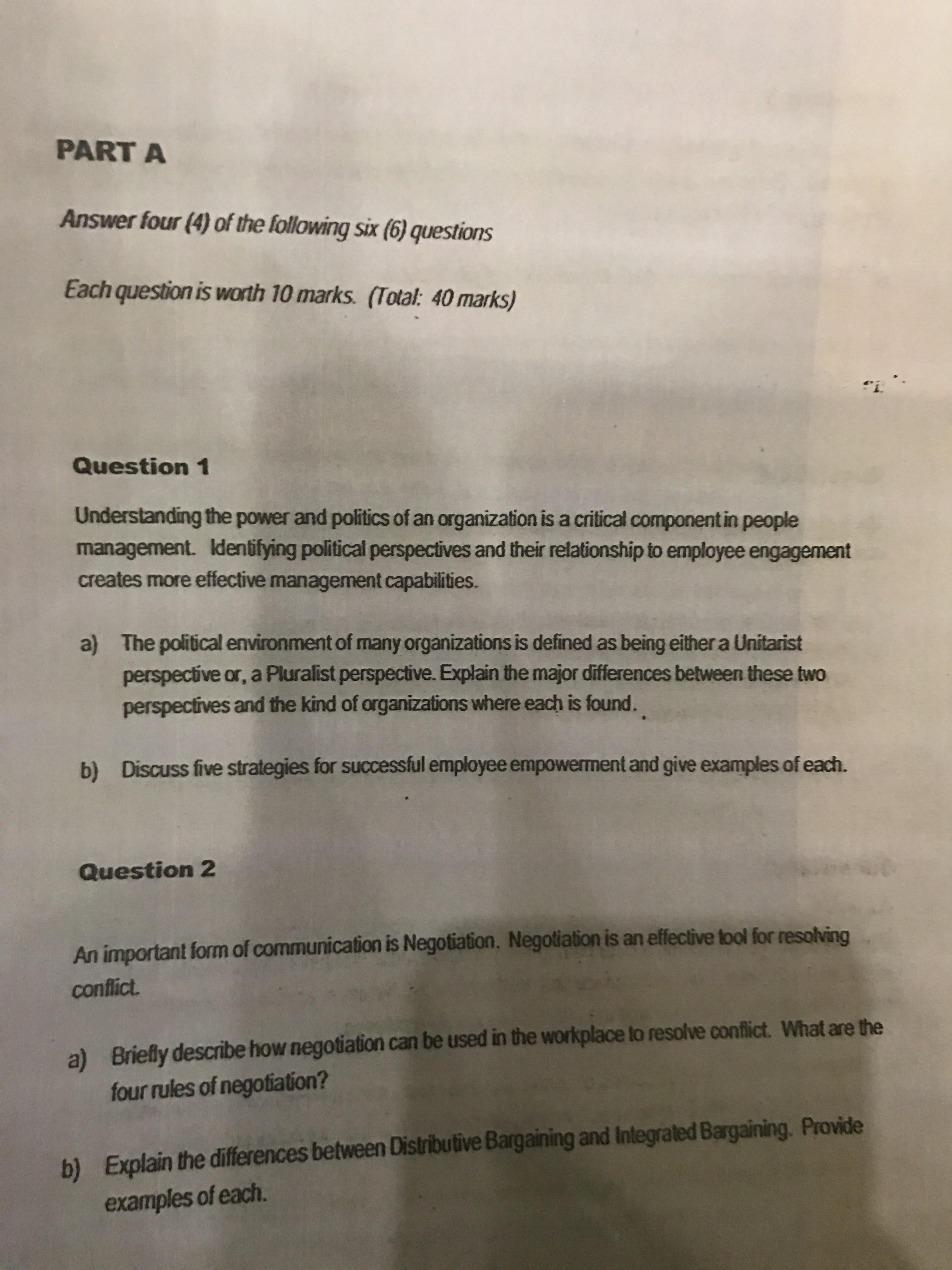
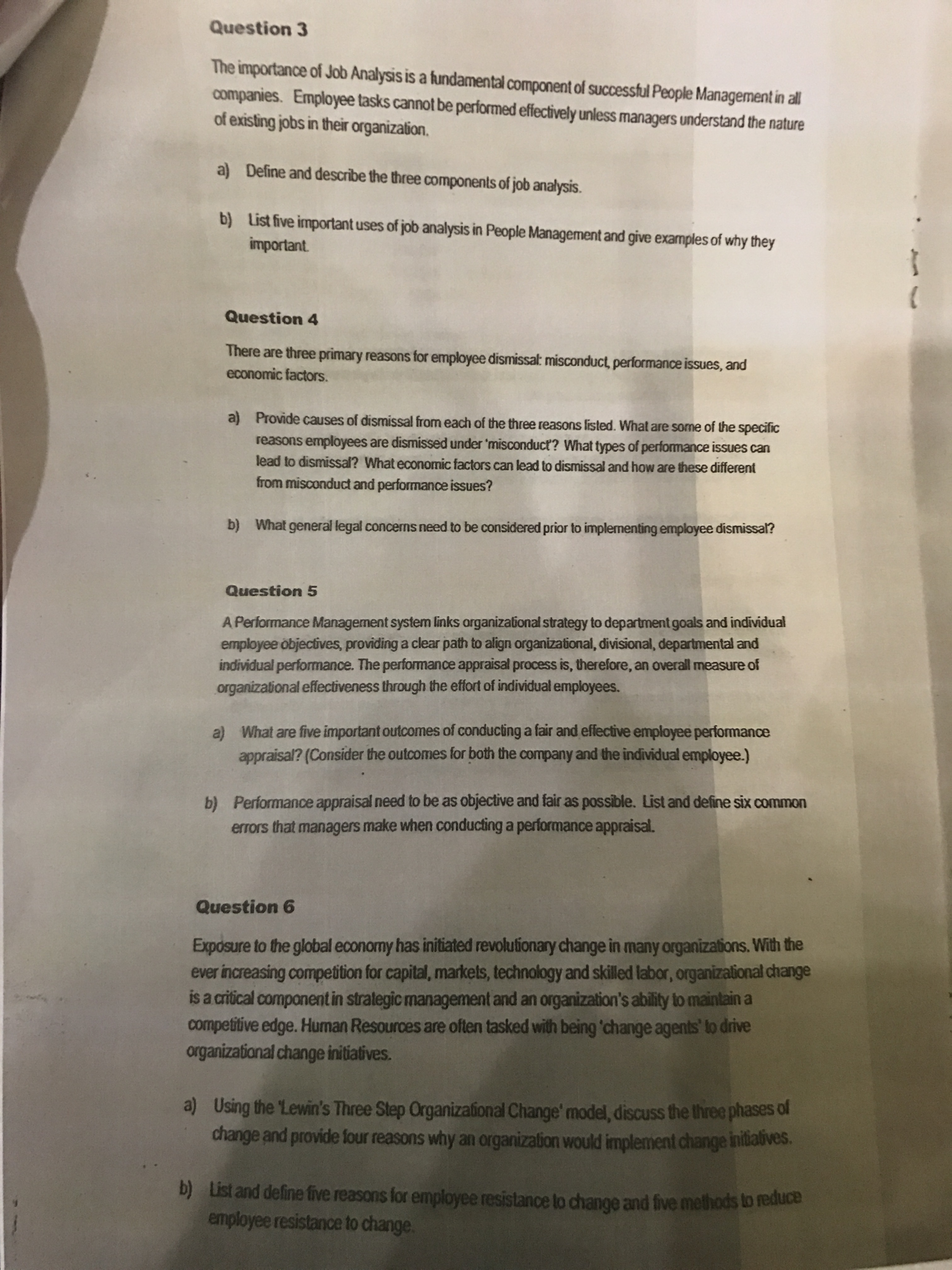
Question 1 Understand the power and politics of an organization is an critical component in people management. Identifying political perspective and their relationship to employee engagement creates more effective management capabilities. a) the political environment of Many organizations is defined as being either a Unitarist perspective or, a pluralist perspective. Explain the major differences between these two perspectives and the kind of organizations where each is found. B) discuss five strategies for Successful employee empowerment and give examples of each. Question 2. An important form of communication is negotiation. Negotiation is an effective is an effective tool for resolving conflict. A) Briefly describe how negotiation can be used in the workplace to resolve conflict. What are the four rules of negotiation? B) Explain the differences between distributes bargaining and integrated bargaining. Provide examples of each. Question 3. The importance of job analysis is a fundamental component of successful people management in all companies. Employees tasks cannot be perfumed effectively unless managers understand the nature of existing jobs in their organization. A) Define and describe the three components of job analysis. B) list five important uses of job analysis in people management and give examples of why they important. Question 4. A) there are two primary reasons for employee dismissal, misconduct, performance issues, and economic factors. B) what general legal concerns need to be considered prior to implementing employee dismissal? Question 5. A performance management system links organizational strategy to departure goals and individual employee objectives, providing a clear path to align organizational, divisional, departmental and individual performance. The performance appraisal process is, therefore, an overall measure of organizational effectiveness through the effort of individual employees. A) what are five important outcomes of conducting a fair and effective employee performance appraisal? (Consider the outcomes for both the company and the individual employee). B) performance appraisal need to be as objective and fair as possible. List and define six common errors that managers make when conducting a performance appraisal.
Attachments: