APlusGrades
$15/per page/Negotiable
1. You are a living organism. Which characteristics of life do you exhibit?
2. Why is the concept of homeostasis meaningful in the study of human biology?
3. What is meant by biological evolution?
4. Study Figure 1.5. Then summarize what biological organization means.
5. Define and distinguish between:
a hypothesis and a scientific theory
an experimental group and a control group
Critical Thinking: Chapter 1
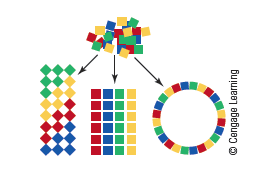
The diagram shows how tiles can be put together in different ways. How does this example relate to the role of DNA as the universal genetic material in organisms?
Court witnesses are asked "to tell the truth, the whole truth, and nothing but the truth." Research shows, however, that eyewitness accounts of crimes often are unreliable because even the most conscientious witnesses misremember details of what they observed. What other factors that might affect the "truth" a court witness presents?
Design a test (or series of tests) to support or refute this hypothesis: People who have no family history of high blood pressure (hypertension) but who eat a diet high in salt are more likely to develop high blood pressure than people with a similar family history but whose diet is much lower in salt.
In a popular magazine article, the author reports health benefits attributed to a particular dietary supplement. What kinds of evidence should the article, cite to help you decide whether the information is likely to be accurate?
Researchers studied 393 patients in a hospital's coronary care unit. In the experiment, volunteers were asked to pray daily for a patient's rapid recovery and for the prevention of complications and death. None of the patients knew if he or she was being prayed for. None of the volunteers or patients knew each other. The research team categorized how each patient fared as "good," "intermediate," or "bad." They concluded that "prayed for" patients fared a little better than other patients—the experiment having documented results that seemed to support the prediction that prayer might havebeneficial effects for seriously ill patients.
The results brought a storm of criticism, mostly from scientists who cited bias in the experimental design. For instance, the patients were categorized after the experiment was over, instead of as they were undergoing treatment, so the team already knew which ones had improved, stayed about the same, or gotten worse. Why do you suppose the experiment generated a heated response from many in the scientific community? Can you think of at least one other variable that might have affected the outcome of each patient's illness?
Attachments: