ComputerScienceExpert
$18/per page/
A computer's operating system stores files in:
Select one:
a. Slack space
b. File allocation tables
c. Clusters
d. Text
Why is it not a good idea to trust a file extension?
Select one:
a. The file may not be the type of file that the extension indicates.
b. File extensions can include malware.
c. File extensions are not cross-compatible between operating systems.
d. The file extension can hide steganography.
If you delete a file and then save a smaller file to the same sectors on the hard drive, what happens to the original file?
Select one:
a. A fragment of the original file still exists and can usually be recovered.
b. The original file is zeroed out, but magnetic resonance from the file may still be recoverable.
c. The original file is moved to swap space, where it can usually be recovered.
d. The operating system can still access the deleted file, but computer forensics investigators usually can't recover any data from the file.
What is slack space?
Select one:
a. The "land" on an optical drive, such as a CD or DVD, where there's no data
b. The time a CPU allocates to resting after power-consuming disk operations
c. Unused sectors that are allocated to a file that a deleted file may have previously used
d. Clusters on a hard drive for use by the operating system when there's not enough RAM
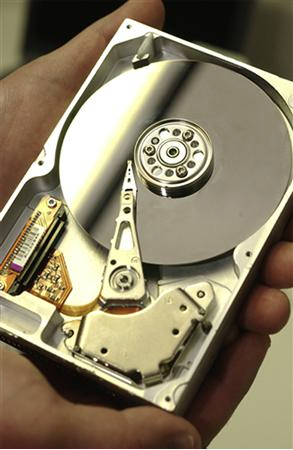
What computer technology is visible in this photo?
Select one:
a. The crystal oscillator and circuit board inside a flash drive
b. The platter and actuator arm of a standard hard drive
c. The internal electronics of a solid state drive
d. An optical disk and laser inside a DVD drive
Attachments: