SuperTutor
$15/per page/Negotiable
Essay
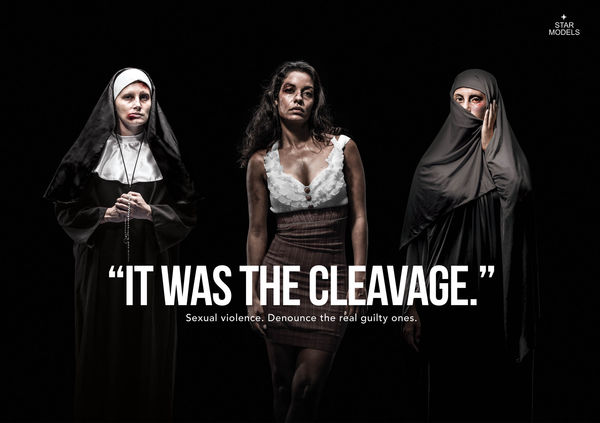
For this assignment, I need help to explain in 1200-1300 words essay in which you will choose an image from the ones attached and rhetorically analyze it looking at the visual text's structure and appeals and how it relates to its audience. You will identify and analyze the visual text's rhetorical situation and its use of appeals in order to support a claim for how well (or not so well) the components of the visual text's argument work together to persuade the audience.
In this essay you must discuss at least two sides of an ethical issue you have identified in the image. Then you must take a position on that issue, stating why your position is correct and the other position wrong. In this discussion, you must state the consequences of each position.
Format/Requirements
Your rhetorical analysis should be (double spaced, in Times New Roman, formatted according to MLA guidelines, and include the following in the introduction, the body, and the conclusion:
Introduction: Introduce your topic to your readers by providing a brief description of the text you are working with. Be sure you formulate a detailed and specific claim about the effectiveness of the argument that you are analyzing. While you want your introduction to be functional (it should serve as a preview of your larger essay by explaining, in brief, your purpose and how you intend to develop that purpose), you also want to catch your readers' attention by providing an interesting hook, by contextualizing your project in a thought-provoking way, by offering an insightful comment, etc.
In addition to capturing your readers' interests and providing them with some incentive to keep reading, a good introduction provides a road map for readers to help them navigate the various sections of your essay. Generally, in academic and professional writing, readers want, even need, to know what your purpose is and how you plan on achieving that purpose from the start so that they can make better sense of what they are reading and how it relates to your larger purpose.
Body: Begin with a summary of the document's main claim and its rhetorical situation, and then move into an identification of the different appeals the author uses to be convincing. Make sure you discuss the rhetorical elements at work within the text. Be sure to support all of your claims with evidence. This may include such things as descriptions of an image's visual components or examples of written text used in conjunction with an image.
Conclusion: Finally, include a strong conclusion that not only reminds the reader of your main claim but provides a final analysis of the work
Attached is the image